
10 Common Mistakes that Cause Mindfulness Practice to Fail
 There are many reasons why you might feel like your efforts to incorporate mindfulness into your life haven’t worked for you. Here are some common mistakes that interfere with successful mindfulness practice followed by effective ways to avoid and overcome these obstacles.
a. I don’t have time. People are busy these days. And, at first, many people feel that mindfulness is a waste of time and they should use the time to get stuff done.
 It doesn’t take any time at all to practice being mindful while brushing teeth, taking a shower, eating or driving. It just takes a small commitment to doing it and something to remind you to do it.
Yes, the sitting meditations do take time, anywhere from a few minutes to 15 or 20 minutes. In order for you to be willing to set aside the time, make sure you understand what the likely benefits will be.
b. I forgot. It is not unusual to forget to practice mindfulness as the busyness of life takes over. Review the benefits you expect from mindfulness practice and make a commitment to practicing. Find a way to remind yourself to be mindful. Perhaps you can put a sticky note reminder on the bathroom mirror to be mindful while brushing your teeth, or on the refrigerator to eat mindfully. Set aside time on a regular basis and put it in your electronic planner with an alarm to remind you.
 c. I can’t stay focused, so why bother? It is perfectly normal for thoughts to wander. The goal is to notice those thoughts, dismiss them, and bring attention back to the mindfulness practice. Over and over again. It gets easier with practice but even skilled mindfulness practitioners must still do this.
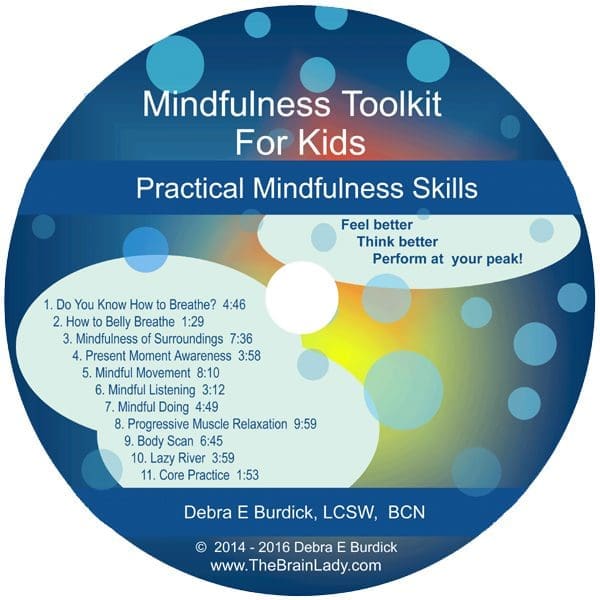
d. I don’t know how to do it right, so it won’t help. There is no one “right†way to practice mindfulness. Experiment and find the ways that work best for you and that you feel confident doing. Listen to a few different guided imagery CDs or attend a meditation class to get a sense of how to practice. Click here for a Mindfulness Toolkit CD full of guided practical mindfulness skills.
e. This doesn’t work for me. People often say, “I’ve tried this before and it doesn’t work for me.†There are so many different ways to practice mindfulness it is highly unlikely that there aren’t some that work for you. The only mindfulness technique many people have heard of is formal sitting meditation. They may have attempted to sit still for 20 minutes without thinking about anything and found this intolerable. That’s okay. There are many other options. Keep trying until you find some that suit you. Start small and work up.
 f. I fell asleep. You may find that you fall asleep when you meditate. If you are exhausted, sleep-deprived, and running on empty, it’s no surprise that if you sit quietly for a few minutes and start to relax, you fall asleep. There are several ways to approach this. First, address why you are so tired and find ways to reduce your fatigue. This might include everything from improving your sleep hygiene to allowing yourself to take a nap. The second way to approach this is to accept that it’s okay to sleep; if you are that tired, then sleep is probably what you need most. This takes the pressure off and, as you address your sleep deficit, you gradually become more able to stay awake. The third approach is to make a commitment to staying awake while you meditate. Perhaps you could do a walking meditation instead of a sitting meditation so you don’t fall asleep. Maybe you could choose a position that doesn’t support sleeping such as kneeling or sitting on a chair with no back. Perhaps you can choose a time to meditate when you are not so tired.
g. It’s too religious for me. It’s true that mindfulness meditation has its roots in Eastern traditions and Buddhism. But Jon Kabat-Zinn brought the skills and practice of mindfulness into the mainstream over 20 years ago. The mindfulness skills I teach are not based in religion and are practiced by those of any or no faith. They can be used in a religious context, but the approach I use for clients is non-secular.
h. I feel silly doing this. Many people feel silly sitting, closing their eyes, and doing the mindfulness practice. Explore what feels silly about it for you and explore options for making yourself feel more comfortable. One option is to do it with a group. Another is to find a private place to practice so you avoid embarrassment or judgment. Typically, feeling silly goes away with practice.
i. It’s boring. Many people report that they feel bored when they first try to meditate. That’s okay. Explore options for making your practice less boring. This might include trying a different mindfulness skill or finding an interesting focus for your attention. It may also include increasing your tolerance for boredom by shortening the time to a tolerable length and gradually increasing it as your tolerance improves. Moving or walking meditations tend to be more tolerable for people with ADHD or for those who feel bored or anxious just sitting still.
 j. I don’t see how this could possibly help me. Review the benefits proven by the research that apply to you. Read up on how mindfulness works and how it helps your condition. Mindfulness has been shown to improve depression, anxiety, stress response, health, concentration, sleep, addictions and much more. Trust the process and give it a try before rejecting it out of hand. If you cannot do so, this may not yet be the time to incorporate mindfulness into your life. That’s okay. Everyone is on their own journey.
Connect with me
Products