
Awareness of Pain Without Judgment Skill and Meditation
Background:
People with chronic pain often become overly focused on their symptoms, causing them to ruminate about, agonize over, or struggle with their pain. This, understandably, serves to make the experience of pain worse. Practicing mindfulness helps increase awareness of physical sensations without judgment, which can help you accept your pain without resisting or fighting it and also prevent you from tensing up. Therefore, it can reduce pain perception and improve overall well-being.
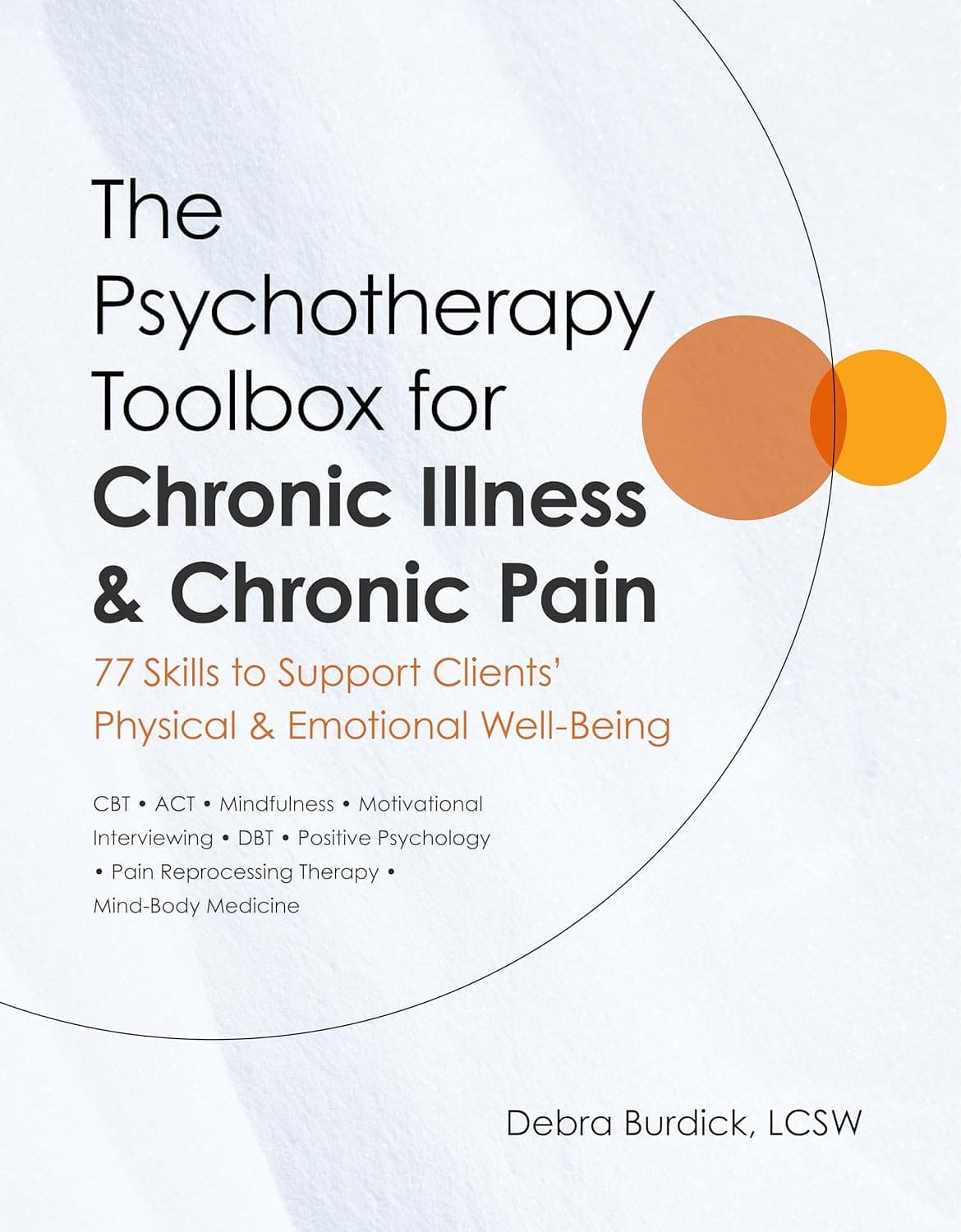
This skill from my book The Psychotherapy Toolbox for Chronic Illness and Chronic Pain, provides a meditation that incorporates the process of somatic tracking to help you practice being aware of your pain without judgment, resistance, or labeling. This can help you learn to accept the pain and allow it to be, which is an essential first step in managing pain.
The Skill in Action:
Stephanie had unremitting chronic pain in her back. She tried desperately to reduce the pain with strategies like stretching, pain medication, cortisone injections, and progressive muscle relaxation, but she still seemed to focus on it almost all of the time. In response, her therapist encouraged her to try a meditation practice that involved learning to be aware of pain without judging or fighting it.
At first, Stephanie was certain that doing this would make her pain worse, as she worried that if she didn’t fight it, the pain would overwhelm her. She nonetheless decided to give it a try, as she was willing to try anything at this point.
The first time she practiced the meditation, she had trouble simply noticing her pain and letting it go. But with time, she was soon able to allow the pain to be present, to accept it, and to stop fighting it. She was surprised when she realized that her pain didn’t get worse and, in fact, seemed somewhat better when she listened to the meditation.
Skill Building:
Explore your feelings about your pain and think about how you typically respond to their pain. Do you fight it? Try to change it? Judge it? Do you feel like your pain is dangerous? When you can practice being aware of your pain without judgment, it may reduce pain perception. That’s because doing so makes you less likely to tense up, resist, or feel stressed by your pain. Read through the meditation below. Then click here to listen to the audio version of the meditation.
You might need to encourage yourself to give this practice a try, as your first reaction might be to worry that focusing on your pain will only make it worse. Remember, by nonjudgmentally accepting your pain, you can decrease your natural tendency to tense your muscles around the pain or your brain’s natural tendency to react to the pain as a danger signal.
After doing this practice, think about how it felt for to just let the pain be. Practice this meditation daily or anytime your pain grabs your attention. Remember that rewiring your brain’s response to pain can take practice, just as learning anything new does.
Reflection: Were you able to simply let your pain be? Was this approach a new concept for you? Did you worry that your pain would overwhelm you or become worse if you stopped fighting it? Did you notice any change in your pain when you accepted it and allowed it to simply exist? How can you practice this process throughout your day?
Awareness of Pain Without Judgment Meditation
Click here to listen to audio version.
Noticing your pain without trying to change, resist, or judge it can help you avoid tensing up in reaction to pain. This can allow you to better accept the pain and gradually lessen pain perception. Use this meditation to practice being aware of your pain and accepting it without fighting it.
Find a comfortable position, either sitting or lying down, where you won’t be disturbed. Close your eyes and take a deep breath in through your nose to the count of four… 1, 2, 3, 4… Then breathe out through pursed lips to a count of eight… 1, 2, 3, 4, 5, 6, 7, 8.
Now just breathe normally and bring your attention to your body. Simply tune in and take a moment to notice how your body feels.
Now focus on areas of your body that have pain. Just notice the pain without trying to change it. Just let it be.
Accept the pain just as it is. There is nothing you need to do about the pain. Simply surrender to it as it is. Just allow the pain sensations to exist without judging them or resisting them.
Notice the characteristics of the pain. Does it throb, stab, burn, or ache? It is warm, hot, or perhaps cold? Notice if the pain is steady or if it changes while you pay attention to it.
Spend a moment just sitting with the pain. Notice how you can stop fighting it and make peace with the pain.
Just let it be.
There is no need to judge or fight the pain.
Notice how it feels to simply accept the pain without fighting or resisting it.
Now that you have practiced accepting and allowing the pain without judging it or fighting it, notice if there has been any change in the pain or if it remains the same.
Take a deep breath in and fill the painful areas with a healing cushion of air. Breathe out and let the painful areas empty. Do this again. Take a deep breath in, filling any pockets of discomfort with well-being and ease. Now exhale and allow anything that needs to go to flow out of you.
Now breathe normally again and focus on areas of your body that feel comfortable. Stay focused there for a while and say thank you for the comfort.
Open your eyes and return to your day.
Remember to practice accepting your pain without judgment whenever you notice it throughout the day.
For more skills to help with chronic pain and chronic illness check out my book The Psychotherapy Toolbox for Chronic Illness and Chronic Pain.
Connect with me
Products